
★★★★★ Rated 5.0 on Google · 302 reviews across our clinic and doctors
Peptide Therapyin South Tempe, AZ. Physician-Prescribed
Peptide Therapy in South Tempe, AZ.
Medically reviewed by Dr. Scott Maymon, ND, MPH & Dr. Sarah Stone, ND · September 2026

Naturopathic Physician
Dr. Scott Maymon, ND, MPH
Caring for the Valley since 2015, with root-cause functional medicine for hormones, regenerative therapies, pain, and men’s health.
- AZ Naturopathic License #15-1497
- Doctorate, SCNM / Sonoran University (Tempe) · MPH, University of Louisville
- Focus: hormones, regenerative injections, men’s health

Naturopathic Physician
Dr. Sarah Stone, ND
Caring for the Valley since 2015, partnering with patients to treat the root cause across hormones, regenerative therapies, aesthetics, and whole-person wellness.
- AZ Naturopathic License #15-1496
- Doctorate, SCNM / Sonoran University (Tempe) · B.S. Psychology, USF
- Focus: hormones, regenerative therapies, aesthetics, autoimmune
Two licensed NDsprescribed not sold
Labs firstthen a protocol
Free consultation beforeyou commit
5.0 star rating302 Google reviews, clinic + doctors
Prescription peptides for recovery, sleep, immune function, metabolism and energy, prescribed after labs by a licensed physician, not sold off a menu. Including the part most clinics skip: what the evidence actually supports. Serving South Tempe, Ahwatukee, Chandler, Mesa, Gilbert, Scottsdale & Phoenix.
Peptide therapy uses short chains of amino acids, signaling molecules your body already makes, prescribed to support specific functions like tissue repair, sleep, immune regulation, metabolism or growth-hormone release. At Pure Body Health they are prescribed and monitored by a licensed naturopathic physician, because these are prescription compounds and not supplements.
Worth being precise about: peptides that a pharmacy may legally compound are not the same as peptides the FDA has approved as drugs. Most have limited human trial data, the federal list of what may be compounded has changed repeatedly since 2023 and changed again during 2026, and which peptides are appropriate, or available, is decided at consultation rather than from a menu. Individual results vary, and this is not a treatment for any diagnosed disease.
▶Physician-reviewed
Prescription medicine, not supplements.
Peptide therapy here is prescribed by Dr. Scott Maymon, ND, MPH (AZ Naturopathic License #15-1497) and Dr. Sarah Stone, ND (AZ Naturopathic License #15-1496). That matters more in this category than in almost any other we offer. Peptides are increasingly sold online by operations with no prescriber, no examination and no monitoring, and often no legitimate pharmacy behind them. What you get here is a physician who orders labs first, writes a protocol for you specifically, follows up, and is accountable for it. Both carry Arizona license numbers you can verify.

▶What it is
Messengers, not building blocks.
Peptides are short chains of amino acids, typically a few dozen at most, and your body makes and uses hundreds of them as signaling molecules. Insulin is a peptide. So is the hormone that tells you you're full. They are how cells send instructions to one another.
Almost every page on this subject calls them "the building blocks of protein." That is technically true and practically useless, because it describes amino acids in general and explains nothing about why anyone would prescribe one. The useful framing is the opposite: a therapeutic peptide is chosen because it acts on a specific signaling pathway. It is a message, not a material.
That is also why there is no such thing as a general peptide effect. A peptide studied for tendon repair and a peptide studied for sleep have almost nothing in common except their chemistry. Anyone describing "the benefits of peptide therapy" as a single list is selling a category rather than a treatment.
Most are given as a small subcutaneous injection, usually self-administered at home on a defined cycle after we show you how. Some are available as oral or nasal preparations. The route matters less than the protocol: which peptide, what dose, how long, and what we measure afterward.
Peptides are prescription compounds, not supplements. The distinction matters because it determines who can legally supply them, whether anyone is monitoring you, and what happens if something goes wrong.
Book a consultation →
▶Is this you?
Is this you? Reasons people ask about peptides.
- Recovery takes longer than it used to
- Sleep isn't restorative
- A tendon or joint that won't settle
- Persistent gut symptoms
- Getting sick more often
- Energy flat despite normal labs
- Training plateau
- Body composition changing
- Brain fog or low mood
- Low libido

▶The peptides
What we prescribe, and what each is for.
Each of these acts on a different pathway and carries a different weight of evidence behind it. Where the human data is thin, this page says so; that is the point of reading it here rather than on a storefront.
BPC-157
Studied for tissue, tendon and gut-lining repair, and the peptide people most often arrive already asking for. Most of the published work is animal research; human trial data is limited, and we will say that plainly before prescribing it rather than after.
Sermorelin
Prompts your own pituitary to release growth hormone in its natural pulsatile rhythm, rather than introducing growth hormone from outside. Used for sleep quality, recovery and body composition. Of the growth-hormone-related peptides it has the longest clinical history.
Ipamorelin
Another growth-hormone-releasing peptide, generally selected for its relatively targeted signaling profile. Often discussed for recovery, sleep and body composition, and frequently paired with sermorelin rather than used alone.
Selank
Studied for anxiety, mood and cognitive focus, developed originally in Russia where most of the clinical literature also originates. That matters when weighing the evidence, and it is a caveat worth hearing before you start rather than discovering later.
PT-141
Acts on pathways in the central nervous system associated with sexual arousal, rather than on blood flow the way the familiar oral medications do. Relevant to both men and women. If sexual health is your main concern, see men's health or women's health.
AOD-9604
A fragment of the growth-hormone molecule studied for its effect on fat metabolism without the broader growth-hormone activity. Human evidence is mixed, and it is not a weight-loss shortcut, if weight is the primary goal, start at weight loss.
Thymulin
A thymus-derived peptide studied for immune regulation and inflammatory balance. Of interest to patients who get sick often or are managing an inflammatory picture, and usually considered alongside immune support rather than instead of it.
Not sure where to start?
Most people arrive naming a peptide they read about, and often it is not the one their labs point to. The consultation exists to work out what you are actually trying to change, and sometimes the answer is that a peptide is not the right tool at all. Which peptide is appropriate for you, and whether any is, is determined by a provider at consultation following examination and laboratory work. Availability of individual compounds changes.
▶The options
The part nobody explains: "Compoundable" is not "FDA-approved."
This is the most misunderstood point in the category, and it is worth getting right before you buy anything. Here is the distinction in plain terms.
FDA-approved
A manufacturer has taken a specific drug through clinical trials and the FDA has reviewed the safety and effectiveness data for a specific use, at a specific dose. A handful of peptide medicines have been through this. Most peptides discussed in wellness settings have not.
Eligible for compounding
A licensed pharmacy may lawfully prepare the substance for an individual patient with a prescription. That is a supply-chain permission, not a verdict on whether it works. No trials are implied, and no standard dose is established by it.
Neither, the grey market
Vials sold online labeled "for research use only." No prescriber, no sterility or purity testing, and no way to know what is in the bottle. This is where most of the harm in this category comes from.
An honest word on the compounding rules
The rules here keep moving. The FDA restricted a number of widely used peptides from 2023, reversed much of that during 2026, and is still reviewing further compounds.
Rather than publish a list that dates within a month, we tell you at your consultation which peptides we can currently obtain through our compounding pharmacy. Accurate as of August 2026.
▶The question everyone asks
Are peptides safe?
It depends on three things: which peptide, where it came from, and whether anyone is monitoring you. That is not a dodge; it is the actual answer, and the three parts matter in that order.
Where it came from matters most
A peptide prescribed by a physician and dispensed by a licensed compounding pharmacy is a fundamentally different product from a vial bought online as a research chemical. Those are not manufactured for human use, are not tested for sterility or purity, and carry no accountability whatsoever. The overwhelming majority of harm in this category traces back to that route rather than to the molecules themselves.
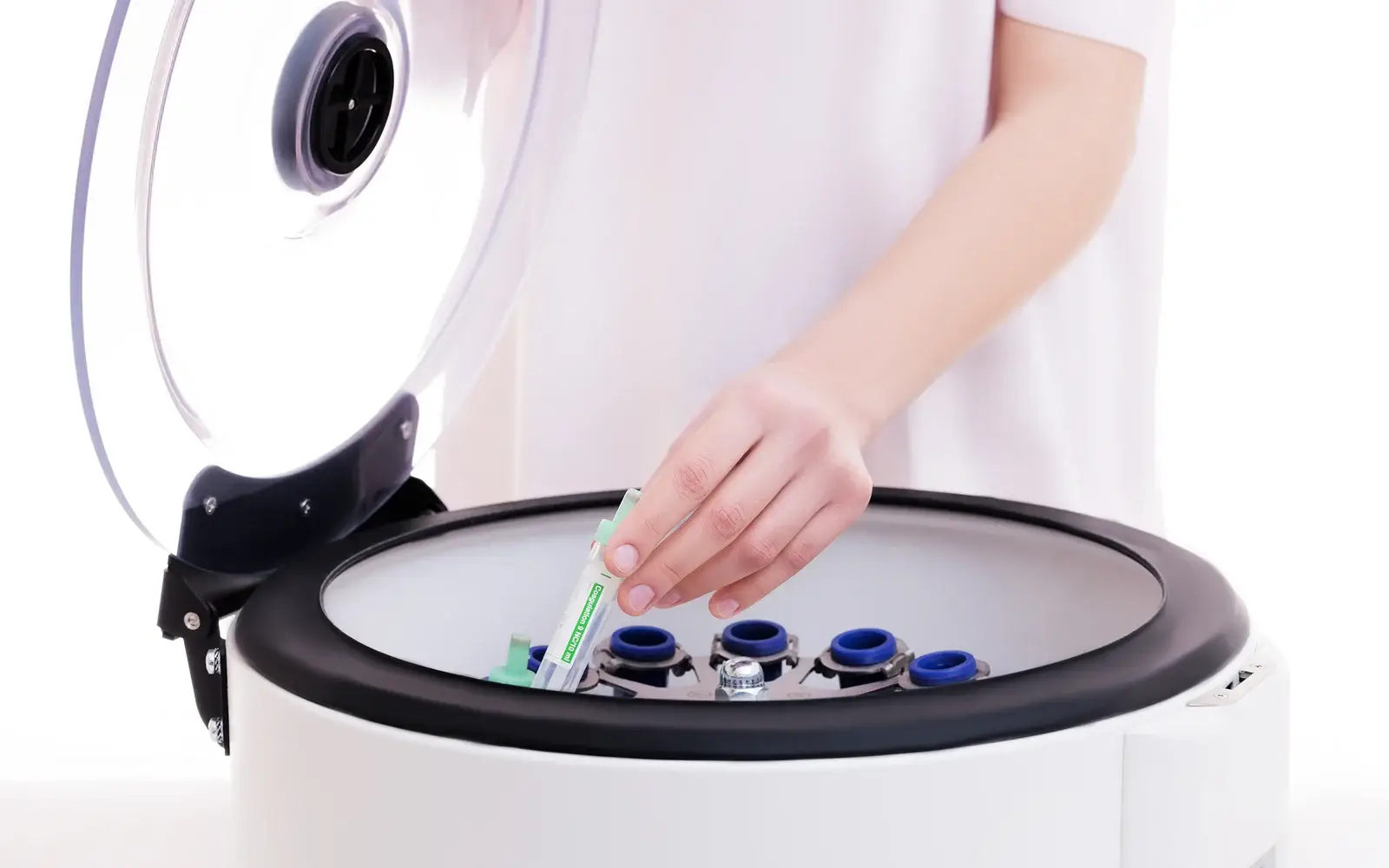
What to expect on a prescribed peptide
Injection-site redness or soreness is the most common effect. Beyond that it is peptide-specific: growth-hormone-releasing peptides can cause water retention, joint aching, tingling in the hands or changes in blood sugar. Human data is limited for several of these, so we go through what is and is not known before you start. Peptides are not used during pregnancy or nursing, and an active or prior cancer diagnosis warrants real caution. Whether a peptide is safe depends on the peptide, the source, and whether a prescriber is watching. Most peptides used in this way are not FDA-approved for these indications and the supporting human evidence varies considerably between compounds. Peptide therapy is not appropriate for everyone and is not a treatment for any diagnosed disease.
Individual results vary and no outcome is guaranteed. Candidacy is determined by a provider at consultation. This page is educational and is not medical advice.
▶What to expect
Labs first, then a protocol.
01
Consultation and laboratory work
We start with what you are actually trying to change and what your bloodwork shows, hormones, inflammatory markers, metabolic panel, whatever the picture calls for. This is the step the online sellers skip entirely, and it is the step that determines whether a peptide is the right tool or whether something more ordinary explains how you feel.
02
A protocol written for you
Which peptide, what dose, how long the cycle runs and what we will measure at the end. Sometimes that means one peptide; sometimes it means addressing a thyroid or hormone issue first and revisiting peptides later. You will be told which of these you are getting and why.
03
Administration and monitoring
Most protocols are self-administered at home as a small subcutaneous injection, and we show you exactly how before you leave. You are not left to work it out from a video. We check in during the cycle rather than at the end of it.
04
Repeat labs and an honest read
At the end of a cycle we look at the markers again alongside how you actually feel. If it moved what we wanted moved, we talk about continuing. If it did not, we say so and stop, which is a conversation that is much easier to have when nobody has pre-sold you six months of vials.
An honest word on peptide therapy
Most peptides used this way are not FDA-approved for these indications, and the human evidence varies a lot between compounds. For some there is reasonable clinical data; for others the published work is largely preclinical. We will tell you which category the peptide you are asking about falls into. Peptides prescribed here come through licensed compounding pharmacies, never from products sold online as research chemicals.
Peptide therapy is not for everyone. It is not used during pregnancy or nursing, an active or prior cancer diagnosis calls for real caution, particularly with anything affecting growth-hormone signaling, and hormone-sensitive conditions, bleeding disorders and medication interactions are assessed individually. A provider decides candidacy after examination and laboratory work.
▶Why Pure Body Health
A prescriber, not a storefront.
Peptides are sold in a lot of places now, most of which have never met you. Here is what is different about getting them here:
A prescription after labs.
We order bloodwork before we prescribe, because the peptide you read about and the peptide your labs point to are frequently not the same one. (Rather than: a menu of compounds.)
Straight about what isn't settled.
Some of these have solid evidence and some don't. You will be told which is which for the specific peptide you are considering, before you pay for it. (Rather than: "totally safe and natural.")
Seen by a licensed physician.
Dr. Scott Maymon, ND, MPH and Dr. Sarah Stone, ND, with Arizona license numbers you can verify, and a pharmacy behind the prescription. (Rather than: ordered online, never examined.)
One cycle, then we re-check.
We measure at the end of a cycle and stop if it didn't work. That conversation is easier when nobody has already been sold half a year of vials. (Rather than: a six-month stack, pre-paid.)
▶Next step
Start with the free consultation.
Cost depends on which peptide is prescribed, the dose, how long the cycle runs and whether laboratory work is part of the plan, so the figure worth knowing is the cost of a full protocol, not a per-vial price. Pharmacy pricing also moves as availability changes. You'll get a straight read on whether a peptide is the right tool for what you're describing, and what the whole thing costs, before anything is prescribed.
▶FAQ
Peptide therapy, answered.
What is peptide therapy?
Peptide therapy is the prescribed use of short chains of amino acids to support a specific physiological function. Peptides are signaling molecules your body already makes and uses to tell cells what to do, and a prescribed peptide is chosen because it acts on one of those signaling pathways. Describing them as building blocks of protein is technically true but misses the point: they are messengers rather than raw material. They are prescription compounds obtained through a licensed pharmacy, not supplements you can buy over a counter.
What does peptide therapy do?
It depends entirely on the peptide, which is why a single answer to this question is a warning sign rather than a helpful summary. Different peptides are studied for different things: some for tissue and tendon repair, some for sleep quality and growth-hormone release, some for immune regulation, some for metabolic function, some for mood, focus or libido. What they share is a mechanism, not an effect. A peptide protocol is written around the specific function you are trying to support, after labs and an examination.
Does peptide therapy actually work?
For some peptides there is reasonable evidence; for others the honest answer is that the human data is thin and much of what circulates online comes from animal studies, small trials or self-reported experience. We are not going to tell you every peptide is proven, because it is not true. What we will do is tell you, for the specific peptide being discussed, what the evidence actually supports, what it does not, and whether it is worth your money. Some conversations end with us recommending against it.
Are peptides safe?
That depends on three things: which peptide, where it came from, and whether anyone is monitoring you. Peptides prescribed by a physician and dispensed by a licensed compounding pharmacy are a different proposition from vials bought online as research chemicals, which are not made for human use, are not tested for sterility or purity, and are not anyone's responsibility if something goes wrong. Even prescribed peptides are not the right fit for everyone. An active or prior cancer diagnosis, pregnancy and nursing, and certain hormone-sensitive conditions all warrant caution or rule the therapy out.
Is peptide therapy FDA-approved?
Mostly no, and this is the most misunderstood point in the whole category. A small number of peptide medicines are FDA-approved drugs. Most peptides used in this kind of therapy are not: they are compounded by a licensed pharmacy for an individual patient. Those are different legal statuses. A substance being eligible for compounding means a pharmacy may lawfully prepare it; it does not mean the FDA has reviewed it for safety or effectiveness, and it does not establish a standard dose. The federal list of which substances may be compounded has changed several times since 2023 and changed again during 2026, so what is available can shift. Any clinic implying blanket FDA approval for peptide therapy is misinforming you.
How much does peptide therapy cost in South Tempe?
Cost depends on which peptide is prescribed, the dose, the length of the cycle, and whether laboratory work is part of the plan, so the figure that matters is the cost of a full protocol rather than a per-vial price. Pharmacy pricing also varies between compounds and can move when availability changes. We review the whole plan and what it will cost at your consultation, before anything is prescribed.
How long before peptide therapy works?
It varies by peptide and by what is being targeted. Effects on sleep or recovery are sometimes noticed within a couple of weeks, while changes tied to tissue repair, body composition or growth-hormone signaling are generally assessed over a cycle of roughly eight to twelve weeks. This is one reason follow-up labs matter: they give an objective read rather than relying on how you think you feel, and they tell us whether continuing is justified.
What are the side effects of peptide therapy?
The most common are local and minor: redness, itching or soreness at the injection site. Beyond that, side effects are specific to the peptide rather than general to the category. Growth-hormone-releasing peptides can cause water retention, joint aching, tingling in the hands or changes in blood sugar. Others can cause flushing, nausea or headache. Because the evidence base is limited for many peptides, long-term effects are not fully characterized, and that uncertainty is part of what your provider will discuss with you before prescribing.
Can women have peptide therapy?
Yes. Peptide therapy is not sex-specific, and a good deal of the marketing around it skews male in a way the underlying biology does not. Women see us for recovery, sleep, immune support, metabolic function, energy and libido, and peptide protocols are frequently run alongside hormone work rather than instead of it. It is not appropriate during pregnancy or while nursing, and candidacy is assessed individually.
Where do you serve besides South Tempe?
Pure Body Health is at 1553 W Todd Drive, Suite 106, just off I-10 at Elliot Road on South Priest Drive in South Tempe. Patients come from across the East Valley: Ahwatukee Foothills is roughly twelve minutes away, Chandler about twenty, Mesa about twenty-two, Gilbert about twenty-four, and Scottsdale and Phoenix about twenty-five each in typical Valley traffic.
▶Get started
Book a peptide therapy consultation in South Tempe.
A free consultation with a licensed naturopathic physician, labs first, an honest read on what the evidence supports, and a straight answer about whether a peptide is the right tool for what you're describing.
▶Patients we serve across the Valley
Rooted in South Tempe, close to the whole East Valley.
Just off I-10 at Elliot Road on South Priest Drive, an easy drive from Ahwatukee, Chandler, Gilbert, Mesa, Scottsdale, and Phoenix.
- South Tempe~5 min
- Ahwatukee Foothills~12 min
- Chandler~20 min
- Mesa~22 min
- Gilbert~24 min
- Scottsdale~25 min
- Phoenix~25 min
Approximate drive times in typical Valley traffic.