★★★★★ Rated 5.0 on Google · 302 reviews across our clinic and doctors
Cold Laser Therapyin South Tempe, AZ
Cold laser therapy, also called low-level laser therapy (LLLT) or photobiomodulation, for pain, injury and recovery, delivered by two licensed naturopathic physicians who will tell you honestly whether the laser is the right tool for your problem. No heat, no needles, no downtime. Serving South Tempe, Ahwatukee, Chandler, Mesa, Gilbert, Scottsdale & Phoenix.
Medically reviewed by Dr. Scott Maymon, ND, MPH & Dr. Sarah Stone, ND · September 2026
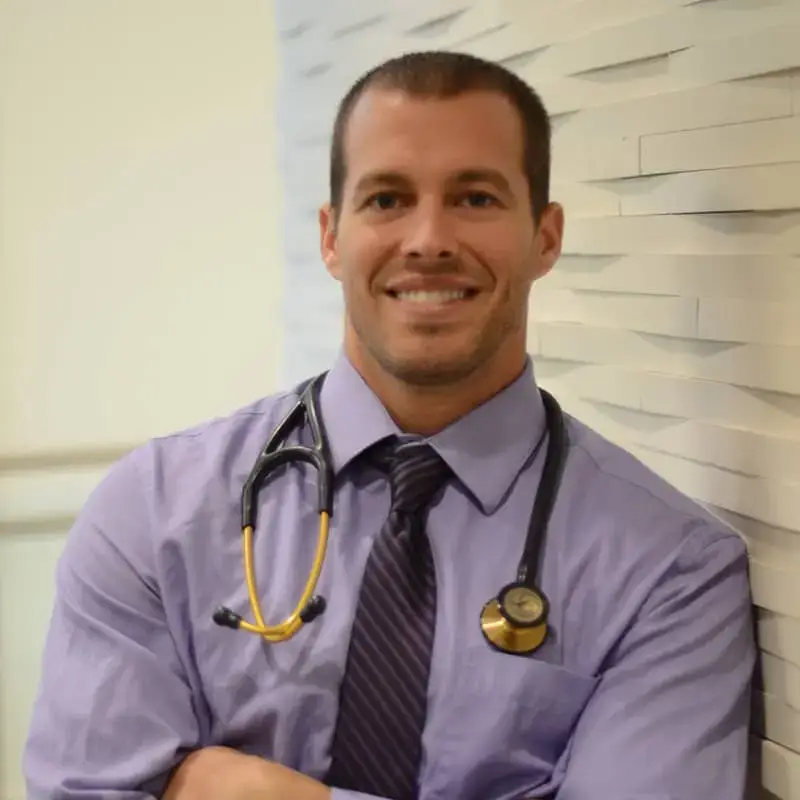
Naturopathic Physician
Dr. Scott Maymon, ND, MPH
Caring for the Valley since 2015, with root-cause functional medicine for hormones, regenerative therapies, pain, and men’s health.
- AZ Naturopathic License #15-1497
- Doctorate, SCNM / Sonoran University (Tempe) · MPH, University of Louisville
- Focus: hormones, regenerative injections, men’s health
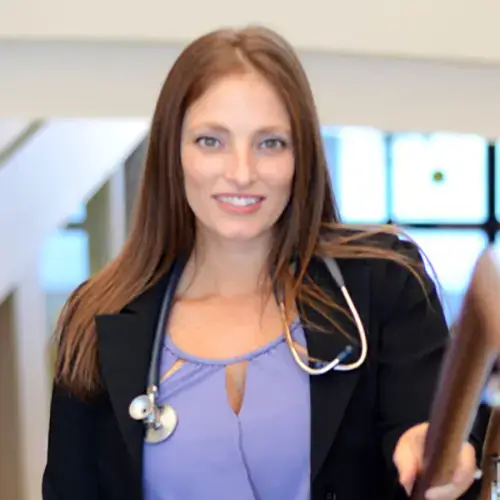
Naturopathic Physician
Dr. Sarah Stone, ND
Caring for the Valley since 2015, partnering with patients to treat the root cause across hormones, regenerative therapies, aesthetics, and whole-person wellness.
- AZ Naturopathic License #15-1496
- Doctorate, SCNM / Sonoran University (Tempe) · B.S. Psychology, USF
- Focus: hormones, regenerative therapies, aesthetics, autoimmune
Two licensed NDsnamed and credentialed
5–20 minutes per sessionno downtime
More than one toolnot a single-device clinic
5.0 star rating302 Google reviews, clinic + doctors
Cold laser therapy, also called low-level laser therapy (LLLT) or photobiomodulation, uses low-wattage light to stimulate cellular activity in tissue, and it is used to support pain relief, reduced inflammation and healing without heat, needles or downtime. Sessions are short, typically 5 to 20 minutes depending on the area treated, and treatment is almost always delivered as a series rather than a single visit.
At Pure Body Health in South Tempe, two licensed naturopathic physicians decide whether the laser is actually the right tool for your problem, and tell you when it isn't. Cold laser sits alongside regenerative injections, PEMF, shockwave and peptide therapy here, so you get the treatment that fits the diagnosis rather than the one device the clinic happens to own. Results vary, it is not appropriate for everyone.
▶Physician-reviewed
A physician decides, not a device.
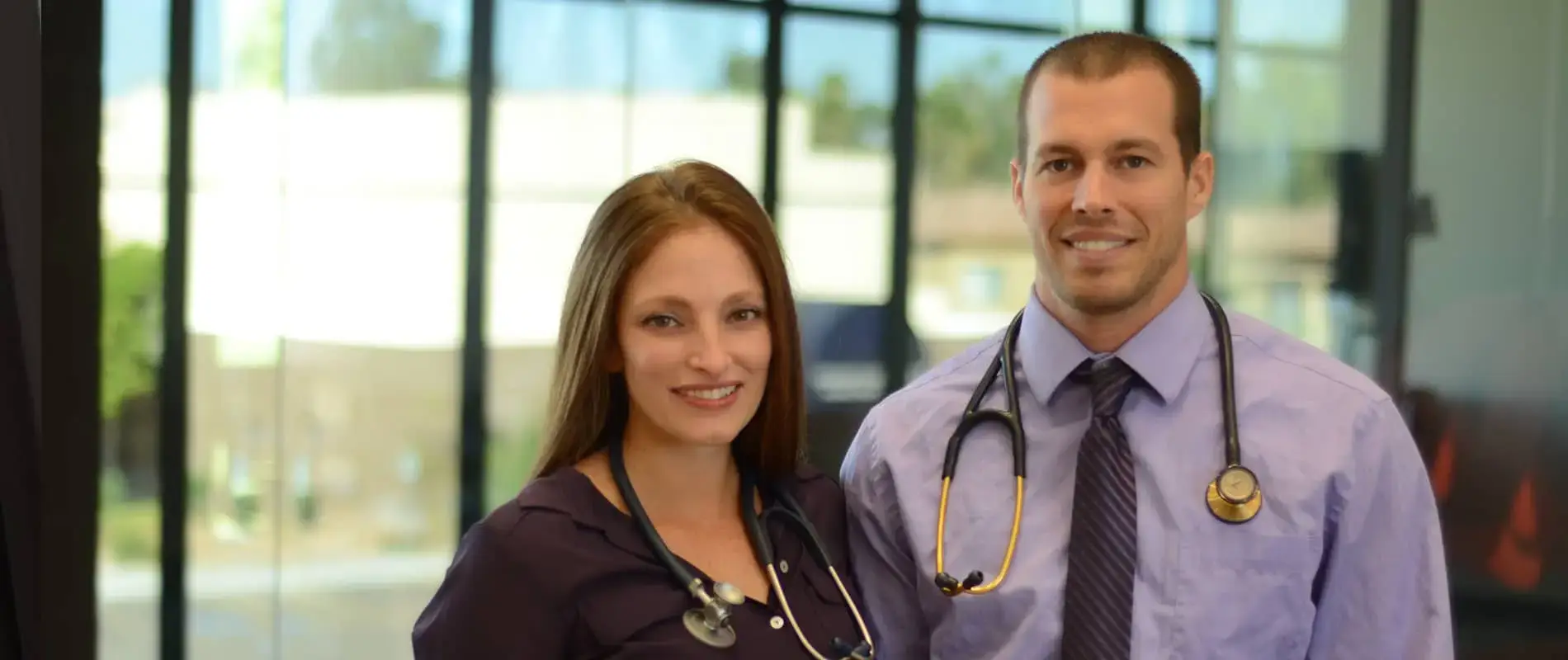
Your treatment plan is built by Dr. Scott Maymon, ND, MPH (AZ Naturopathic License #15-1497) and Dr. Sarah Stone, ND (AZ Naturopathic License #15-1496). Dr. Maymon leads our pain and regenerative work, including cold laser, regenerative injections and prolotherapy. That matters here more than it might elsewhere: most places offering cold laser have one laser and one answer. We have a range of options, so the honest recommendation is available to us, including telling you the laser isn't what your problem needs.
▶What it is
Light, not heat.
Cold laser therapy uses low-wattage light, typically between 5 and 500 milliwatts, against the roughly 300 watts of a surgical laser, which is why it produces no heat, no burning and no downtime. The "cold" in the name is literal: the light passes into tissue without raising its temperature.
You will see the same treatment called three different things. Cold laser therapy is what most patients say. Low-level laser therapy, or LLLT, is the older clinical term. Photobiomodulation is what the research literature has largely moved to. They describe the same thing: specific wavelengths of red and near-infrared light absorbed by structures inside your cells, prompting a cellular response that appears to support tissue repair and modulate inflammation.
In practice it is undramatic. A handheld applicator is held over the area for a few minutes. You wear eye protection. Most people feel nothing at all beyond the applicator resting against the skin, no clicking, no zap, no soreness afterward. You drive yourself home and go back to your day.
Cold laser therapy, low-level laser therapy and photobiomodulation are three names for the same treatment, low-wattage light used to stimulate cellular activity in tissue, with no heat and no downtime.
Book a consultation →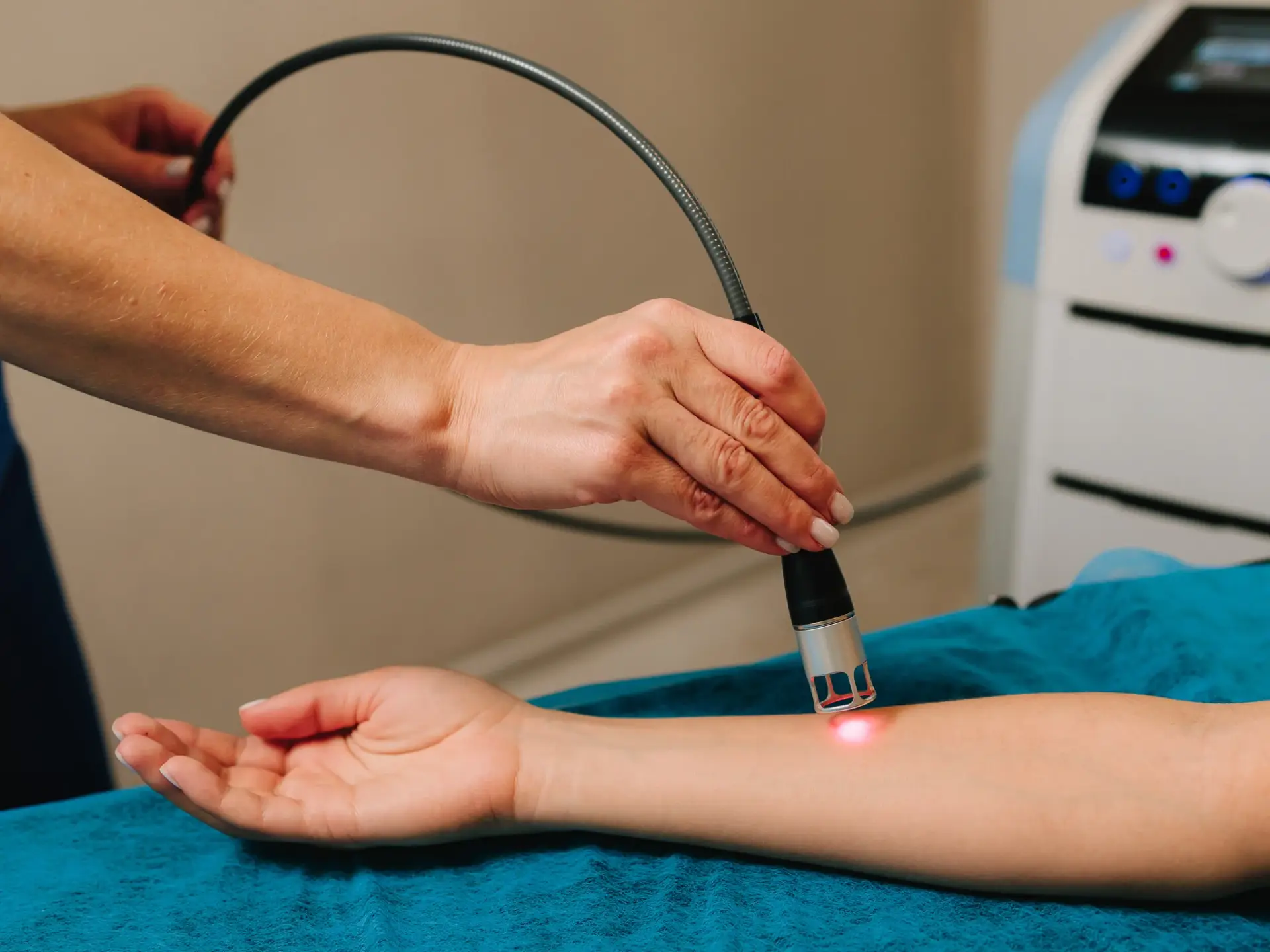
The question everyone asks
Does cold laser therapy actually work? Honestly: the evidence is stronger for some uses than others, and any clinic that tells you it works for everything is overselling it.
There is reasonable research support for cold laser in several musculoskeletal applications, neck and low back pain, tendinopathies, and some wound-healing contexts, where studies have generally found it to be a low-risk option that may help reduce pain and support recovery. The evidence is thinner and more mixed for other conditions, and study quality across the field varies widely, partly because devices, wavelengths and dosing differ so much between clinics.
What that means for you: cold laser is a reasonable thing to try for the right problem, it is very unlikely to hurt you, and it is not a cure for anything. We will tell you which category your situation falls into before you spend money on a series, and if the honest answer is that something else has a better chance of helping, we will say so.
▶Is this you?
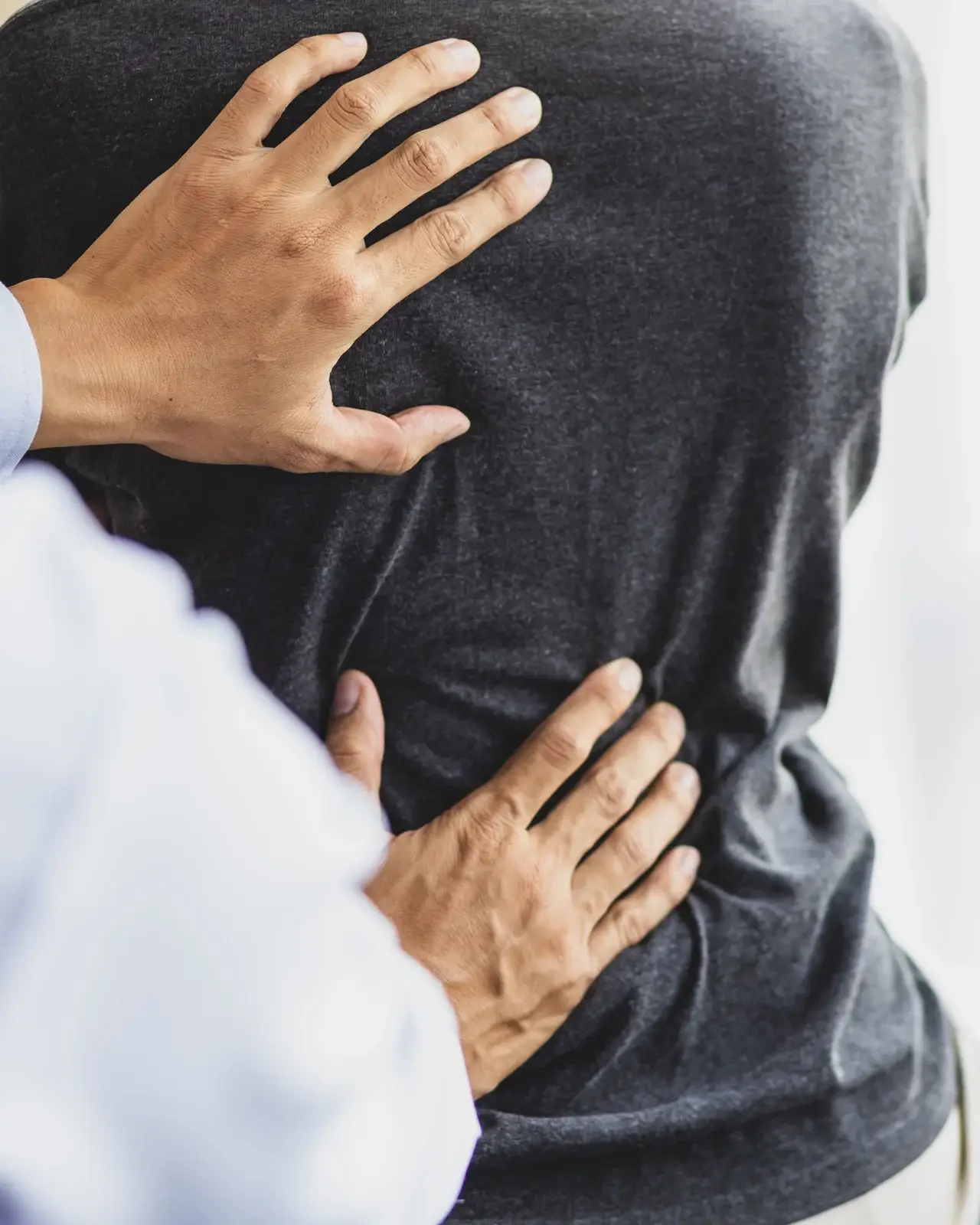
Is this you? Reasons people ask about the laser.
- Nagging joint pain that won't settle
- Plantar fasciitis
- Tendonitis or tennis elbow
- A sports injury that won't finish healing
- Neck or low back pain
- Recovering after surgery
- Neuropathy symptoms
- Inflammation after hard training
- Want to avoid or reduce medication
- Told surgery is the only option left
▶What we use it for
Where cold laser fits, and where it doesn't.
The first three are what we treat with the laser. The last three are what we reach for instead when the laser isn't the right answer, which is the part most clinics offering cold laser can't offer you.
Musculoskeletal pain
Neck, back, shoulder, knee, hip and foot pain, including plantar fasciitis and tendinopathies. Usually the strongest case for cold laser, and typically delivered as a series alongside the rest of your plan.
Injury & recovery support
Sports injuries, sprains and strains, overuse injuries, and post-surgical recovery where the goal is supporting tissue repair without adding medication or downtime. Pairs with sports medicine care.
Inflammation & nerve symptoms
Localized inflammation and some neuropathy presentations. Candidacy varies a great deal here, and it is one of the areas where we are most careful about setting expectations before starting.
Instead: regenerative injections
When a joint, tendon or ligament needs more than light. PRP, prolotherapy, prolozone or perineural injection therapy can address the structure directly. See regenerative injections.
Instead: PEMF therapy
A different mechanism for overlapping problems, using pulsed electromagnetic fields rather than light. Sometimes the better fit, sometimes used alongside. See PEMF therapy.
Instead: a real workup
Sometimes recurring pain is a signal, not just a site. Functional medicine and pain management let us look for why the tissue keeps failing rather than treating the same spot indefinitely.
Cold laser therapy devices are cleared by the FDA for specific indications; clearance is not the same as approval, and it does not mean a device is effective for every use. Treatment selection follows a provider assessment. These services are not intended to diagnose, treat, prevent, or cure any disease.
▶Not this page
Two other lasers, two other pages.
"Low-level laser" covers more than one treatment, and two of them live elsewhere on this site. If you came here for body contouring, the Zerona Z6 is a low-level laser used to reduce fat and contour the body, a different goal, a different protocol, and not what this page is about.
And if you're here about thinning hair, red light and low-level laser therapy for the scalp is covered on our hair loss treatments page, where it sits alongside PRP, microneedling and the lab work that finds out why the hair is thinning in the first place.
This page is about cold laser for pain, injury and healing.
▶Honest expectations
What a course of treatment looks like.
Cold laser is not a one-visit treatment. Plans are built as a series, weighted toward the front, and reassessed rather than renewed automatically.
Short sessions, front-loaded
A session runs roughly 5 to 20 minutes depending on how much area is being treated. Acute problems commonly need around six sessions; chronic ones often more, scheduled closer together at the start and tapering as things improve.
Some notice early, some don't
A number of people report some change within the first few sessions; others notice gradual improvement over several weeks, and some do not respond at all. We reassess at set points rather than selling you the next block of visits by default. A cold laser session takes about 5 to 20 minutes and you feel almost nothing, usually just the applicator resting against your skin.

Cold laser therapy supports pain relief and tissue healing for appropriate candidates; it is not a cure, and it is not a substitute for necessary medical or surgical care.
▶What to expect
Four steps, in order.
01
Consultation & assessment
01 · Consultation & assessment. A physician examines the area, takes the history of the injury or the pain, and looks at what has already been tried, including imaging and prior treatment where it exists.
02
Deciding whether laser fits
02 · Deciding whether laser fits. We tell you whether cold laser is a reasonable option for your specific problem, whether something else has a better chance, or whether you need a referral rather than a treatment.
03
Your series
03 · Your series. Short sessions on a defined schedule, with eye protection, often combined with other regenerative care. You'll know the planned number of visits and what it costs before you begin.
04
Reassess and adjust
04 · Reassess and adjust. We check progress at agreed points. If it isn't working, we change course or stop; we don't keep selling sessions into a treatment that isn't helping you.
Good to know
What it feels like, and when we would adjust
Cold laser is generally well tolerated. The light produces no heat, so it does not burn or scar, and reported effects are mild and short-lived: occasional soreness, or a brief uptick in symptoms after a session. You wear eye protection, since direct laser light can injure the eye.
We take extra care, or choose something else, over an active or suspected malignancy, over the abdomen in pregnancy, alongside photosensitizing medication, and with certain implanted devices.
Individual results vary and no outcome is guaranteed. Candidacy is determined by a provider at consultation. This page is educational and is not medical advice.
▶Why Pure Body Health
More than one tool in the room.
Most cold laser in the East Valley is offered as an add-on by practices whose main business is something else. Here's the difference:
Physicians with options.
Regenerative injections, PEMF, shockwave, peptide therapy and prolotherapy are all available here, so the recommendation isn't decided by what we happen to own. (Rather than: one device, one answer.)
Two licensed physicians.
Dr. Scott Maymon, ND, MPH and Dr. Sarah Stone, ND, named, with Arizona license numbers you can verify. You are not guessing who is treating you. (Rather than: no practitioner named anywhere.)
Honest about the evidence.
We'll tell you where the research is reasonable and where it's thin, and we won't sell you a series for a problem the laser is unlikely to touch. (Rather than: "laser helps everything.")
Part of a real plan.
Cold laser fits into root-cause pain and regenerative care, local, physician-led, and in South Tempe since 2015. (Rather than: an add-on to an adjustment.)
Cost & insurance
Cold laser therapy is generally not covered by health insurance, most carriers still classify it as investigational, and that is true almost everywhere it's offered, not just here. Better to know that here than at the front desk. Because treatment is a series, the number that matters is the cost of the full course, not the price of one session, and we go through that with you before anything is scheduled. If we don't think a series is worth your money, we'll say so.
▶Next step
Start with a consultation.
Bring your questions. You will get an honest read on whether this is the right fit for you, what a plan looks like, and what it costs, with no obligation to book.
▶FAQ
Cold laser therapy, answered.
What is cold laser therapy?
Cold laser therapy uses low-wattage red and near-infrared light to stimulate cellular activity in tissue, and it is used to support pain relief, reduced inflammation and healing. It produces no heat, requires no needles or incisions, and has no downtime. A session takes roughly 5 to 20 minutes and is typically delivered as part of a series.
Is cold laser therapy the same as low-level laser therapy or photobiomodulation?
Yes, cold laser therapy, low-level laser therapy (LLLT) and photobiomodulation are three names for the same treatment. "Cold laser" is the common patient term, LLLT is the older clinical name, and photobiomodulation is the term most current research uses. You may also see it called low-intensity laser therapy or low-level light therapy.
Does cold laser therapy actually work?
The evidence is stronger for some uses than others, and any clinic claiming it works for everything is overselling it. Research support is reasonable for several musculoskeletal applications, including neck and low back pain, tendinopathies, and some wound healing, where it appears to be a low-risk option that may help. Evidence is thinner and more mixed elsewhere, and study quality varies because devices, wavelengths and dosing differ widely between clinics. We'll tell you which category your problem falls into before you commit to a series.
How much does cold laser therapy cost?
Cost depends on the area being treated and how many sessions your plan calls for, so the number that matters is the cost of the full series rather than a single session. We review the whole cost with you before scheduling anything. Ask any clinic for the series price, not the per-visit price; that is where the real difference shows up.
Will insurance pay for cold laser therapy?
Generally, no. Most health insurers still classify low-level laser therapy as investigational and do not cover it, and that is the case at most clinics offering it, not just ours. Coverage rules vary by plan, so it is always worth checking with your carrier directly. We are upfront about cost before treatment begins so there are no surprises.
What does a cold laser session feel like, and how long does it take?
Most people feel nothing beyond the applicator resting against the skin, and a session takes about 5 to 20 minutes depending on the size of the area. There is no heat, no clicking and no soreness afterward for most patients. You wear eye protection during treatment, and you can drive yourself home and return to normal activity immediately.
How many sessions of cold laser therapy will I need?
Acute problems commonly need around six sessions; chronic problems often need more, scheduled closer together at the start and tapering as symptoms improve. Your physician gives you a specific planned number at your consultation rather than an open-ended package, and we reassess at set points instead of automatically renewing.
Is cold laser therapy safe, and are there side effects?
It is generally well tolerated, and reported side effects are mild and temporary, usually brief soreness or a short-lived increase in symptoms after a session. Because there is no heat, it does not burn or scar. Eye protection is worn because direct laser exposure can damage the eye. Cold laser devices are cleared by the FDA for specific indications, which is a lower regulatory bar than approval and does not establish effectiveness for every advertised use.
Who shouldn't have cold laser therapy?
We avoid treating over active or suspected cancer, over the abdomen during pregnancy, and directly over the eyes. Extra care is taken with anyone on photosensitizing medication or with certain implanted devices. It is not appropriate for everyone, and candidacy is determined by a provider at your consultation, which is also when we'd tell you if your symptoms need imaging or a referral rather than a laser.
What conditions do you use cold laser therapy for?
Most commonly musculoskeletal pain and injury, neck, back, shoulder, knee, hip and foot pain, plantar fasciitis, tendonitis, sprains and strains, overuse injuries, and post-surgical recovery, along with localized inflammation and some neuropathy presentations. It is frequently combined with regenerative injections or PEMF rather than used alone.
How is this different from red light therapy at a spa or a device I can buy online?
The main differences are dose, targeting and diagnosis. Clinical devices deliver specific wavelengths at controlled output to a defined area, and a physician chooses the target and the schedule based on an examination. Consumer panels and home units are typically lower powered and used without a diagnosis, which is the part that matters most, treating the wrong problem carefully still treats the wrong problem.
Where do you serve besides South Tempe?
Our clinic on W Todd Drive sits just off I-10 at Elliot Road in South Tempe, near Ken McDonald Golf Course and the Kyrene corridor. It's an easy drive from Ahwatukee Foothills, Chandler, Mesa, Gilbert, Scottsdale, and greater Phoenix, which matters more than usual for a treatment delivered as a series.
▶Keep exploring
Related care
▶Get started
Find out if the laser is the right tool.
Book a consultation with a licensed naturopathic physician in South Tempe, an honest assessment of whether cold laser fits your problem, and what to do instead if it doesn't.
▶Patients we serve across the Valley
Rooted in South Tempe, close to the whole East Valley.
Just off I-10 at Elliot Road on South Priest Drive, an easy drive from Ahwatukee, Chandler, Gilbert, Mesa, Scottsdale, and Phoenix.
- South Tempe~5 min
- Ahwatukee Foothills~12 min
- Chandler~20 min
- Mesa~22 min
- Gilbert~24 min
- Scottsdale~25 min
- Phoenix~25 min
Approximate drive times in typical Valley traffic.