
★★★★★ Rated 5.0 on Google · 302 reviews across our clinic and doctors
PRP Facialin South Tempe, AZ
Platelet-rich plasma drawn and spun in our office, then injected where the face has lost support, the mid-face, the temples, and the hollows under the eyes. We don't sell dermal filler, so the recommendation isn't a product pitch. Serving South Tempe, Ahwatukee, Chandler, Mesa, Gilbert, Scottsdale & Phoenix.
Medically reviewed by Dr. Scott Maymon, ND, MPH & Dr. Sarah Stone, ND · September 2026

Naturopathic Physician
Dr. Scott Maymon, ND, MPH
Caring for the Valley since 2015, with root-cause functional medicine for hormones, regenerative therapies, pain, and men’s health.
- AZ Naturopathic License #15-1497
- Doctorate, SCNM / Sonoran University (Tempe) · MPH, University of Louisville
- Focus: hormones, regenerative injections, men’s health

Naturopathic Physician
Dr. Sarah Stone, ND
Caring for the Valley since 2015, partnering with patients to treat the root cause across hormones, regenerative therapies, aesthetics, and whole-person wellness.
- AZ Naturopathic License #15-1496
- Doctorate, SCNM / Sonoran University (Tempe) · B.S. Psychology, USF
- Focus: hormones, regenerative therapies, aesthetics, autoimmune
Two licensed NDs
Physician-reviewed
Free consultation
5.0 star rating302 Google reviews, clinic + doctors
▶What it is
What it does
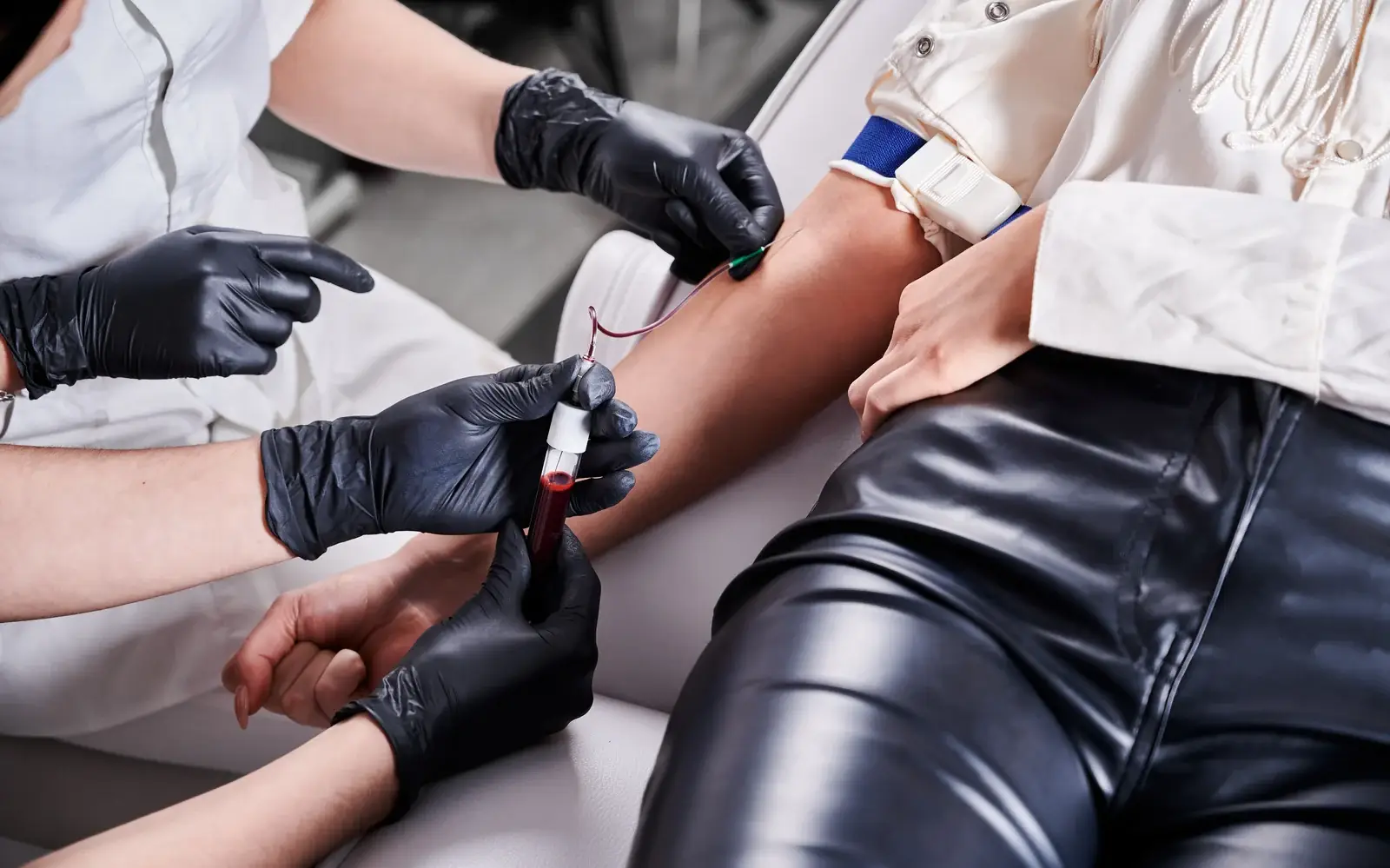
A PRP facial uses platelets concentrated from your own blood to prompt your skin to rebuild its own collagen, rather than adding a synthetic gel underneath it. At Pure Body Health in South Tempe we draw a small sample in the office, spin it down on site, and inject the concentrate where the face has lost support: the mid-face, the temples, and the hollows under the eyes.
It is a slower answer than filler and an honest one. Most people need a series of two to three sessions spaced four to six weeks apart, results build over two to three months as new collagen forms, and how much change you see depends on your anatomy, your age, and how you heal. PRP is not appropriate for everyone, and it is not a substitute for surgical correction of significant laxity. Your provider will tell you which of those you are at a consultation.
Key points: Since 2015 caring for the Valley · Drawn & spun here, not sent out · No synthetic filler, nothing to upsell · Free consultation before you commit · Physician-reviewed.
Book a consultation →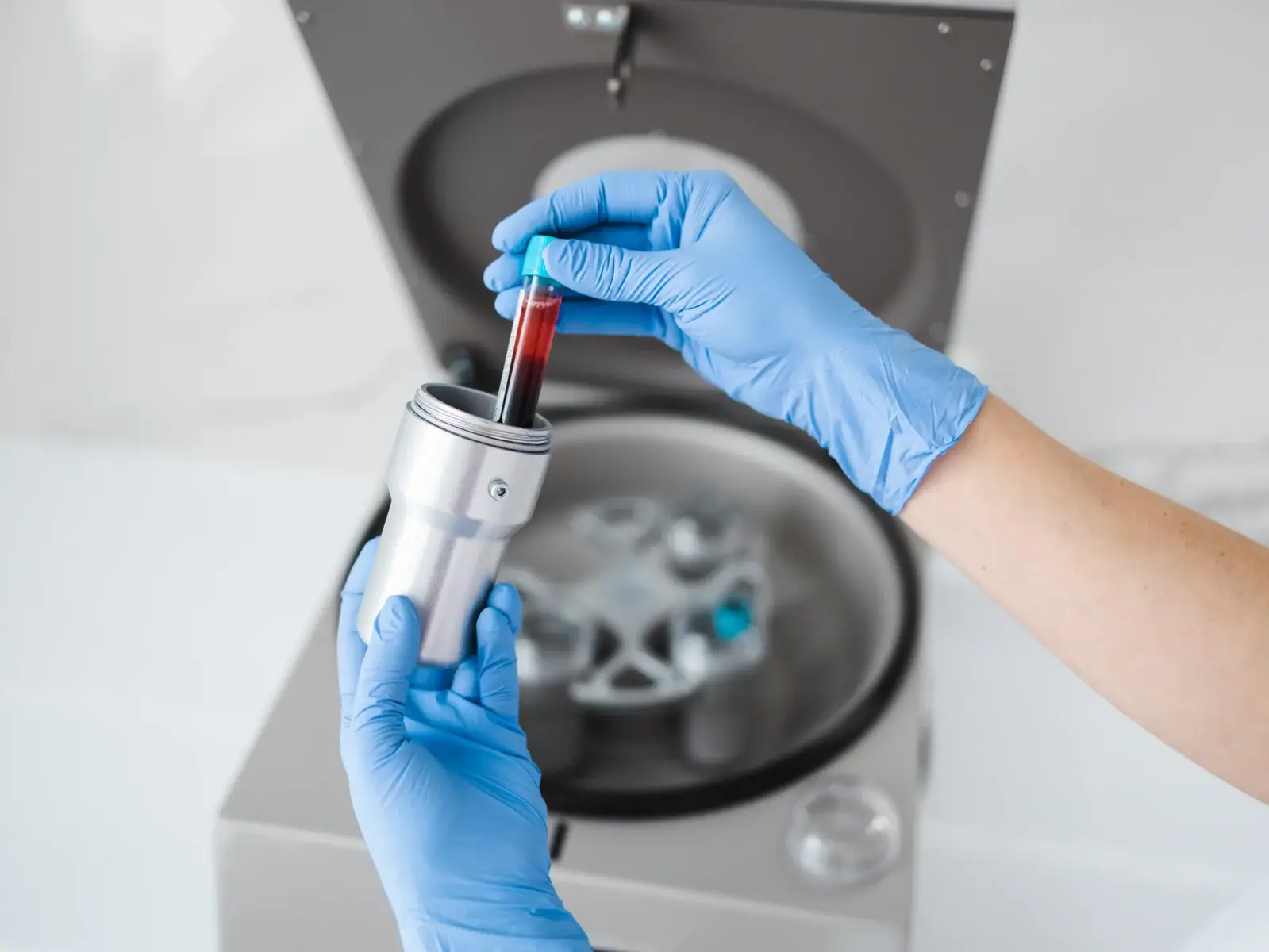
▶Physician-reviewed
Injected by a physician, not an injector.
PRP for the face here is led by Dr. Sarah Stone, ND (AZ Naturopathic License #15-1496), whose focus is aesthetics, regenerative therapies and hormones, alongside Dr. Scott Maymon, ND, MPH (AZ Naturopathic License #15-1497), who performs regenerative injections across the practice. Both are licensed naturopathic physicians with Arizona license numbers you can verify. The blood draw, the spin and the injection all happen in the same room, on the same visit, under the same provider.

▶What it is
Your own platelets, not a gel.
PRP is the platelet-rich fraction of your own blood, concentrated in a centrifuge and re-injected into the face to signal repair. Platelets are the cells your body already dispatches to an injury, and they carry growth factors that recruit repair activity in the surrounding tissue. Concentrating them and placing them where the face has thinned is the whole idea.
The practical difference from a dermal filler is worth being precise about. A filler is a manufactured gel, usually hyaluronic acid; that occupies space from the moment it goes in. It works by displacement. PRP adds no meaningful volume of its own; it works by prompting your skin to produce more of its own collagen over the following weeks. One is architecture, the other is agriculture.
That also means the two have different failure modes. Filler that is placed badly, or migrates, looks wrong until it is dissolved. PRP that doesn't work simply doesn't do much; you are left where you started, minus the cost and the time. Neither outcome is the one we're aiming for, but it is an honest way to weigh the risk.
Because the material comes from your own body, the risk of an allergic reaction or rejection is very low. That is not the same as no risk: any injection carries bruising, swelling and infection risk, and PRP requires a blood draw with its own considerations.
PRP adds no volume of its own; it asks your skin to make its own. A dermal filler occupies space the moment it goes in; PRP works by signaling collagen production, so the change arrives over two to three months and leaves nothing synthetic behind.
▶Is this you?
Is this you? Reasons people ask about PRP for the face.
- The mid-face has flattened
- Hollows or shadows under the eyes
- Crepey texture on the cheeks
- Skin looks dull and tired
- Early fine lines settling in
- Acne scarring you've given up on
- Filler has never looked right on you
- You've had filler and want out of it
- You'd rather change gradually
- You want something using your own biology
▶The menu
Where we use PRP on a face.
PRP isn't one treatment. Where it goes, how deep, and whether it's injected or applied changes what it can do, and two of the options below live on other pages, because they're genuinely different procedures.
PRP facelift, mid-face volume
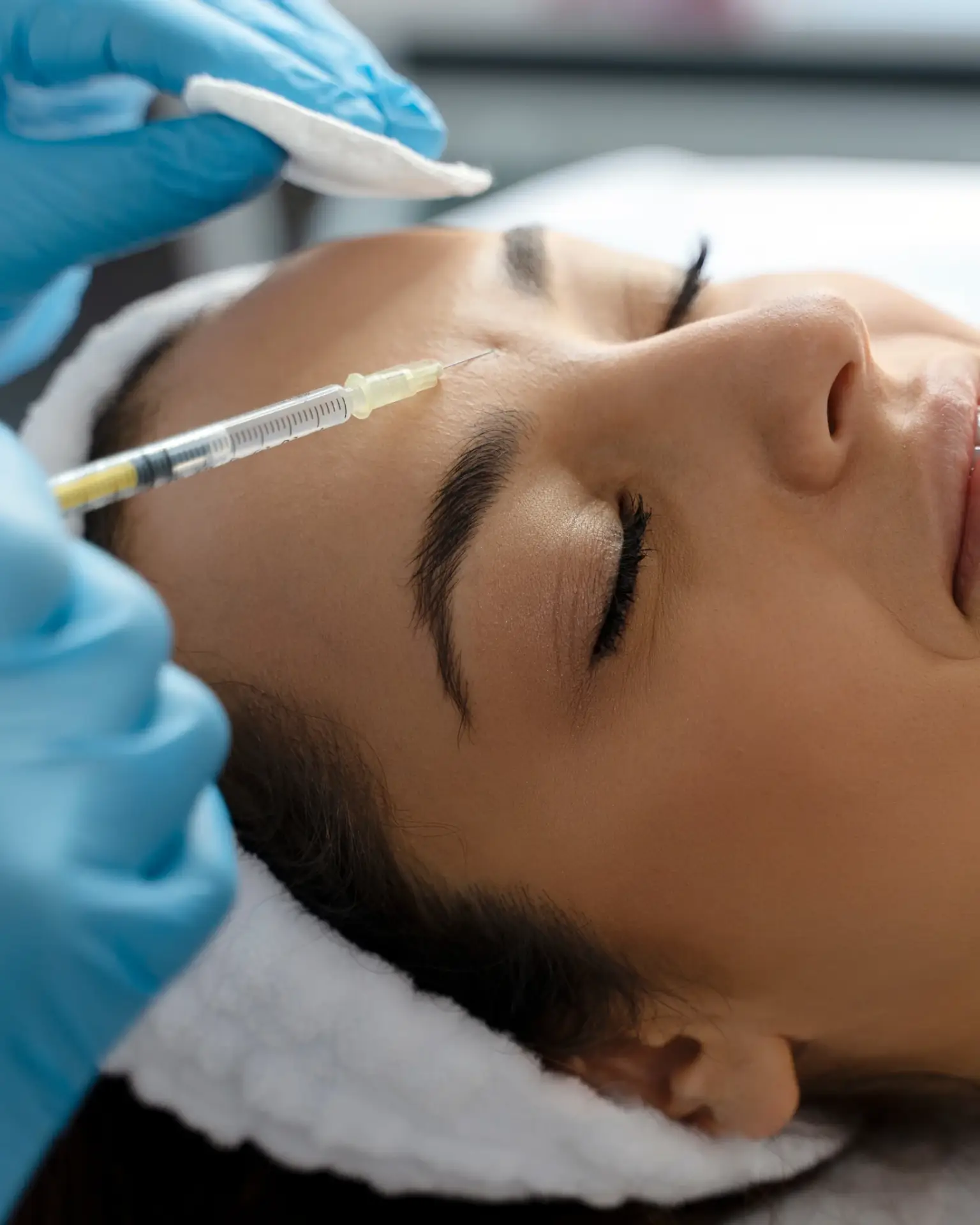
Injected into the cheeks and temples where support has been lost, with the aim of improving skin quality and firmness over the following months. This is the closest thing to what people mean by a "PRP facelift." It is not a surgical facelift and will not lift significant laxity.
Under-eye PRP
Placed in the thin skin below the eye, where hollowing and shadowing show earliest. This is one of the few areas where PRP is often the better first option than filler, because the tissue plane is unforgiving. Not everyone is a candidate, some under-eye shadowing is pigment or bone structure, and PRP won't move either.
Texture, tone and scarring
Used across the face where the concern is quality rather than volume, crepey skin, dullness, fine lines, and older acne scarring. Often combined with a series rather than done once, and often paired with microneedling in the same plan.
PRP with microneedling
A different procedure: instead of injecting, PRP is applied over the micro-channels a needling pen creates. This is what most people mean by the "vampire facial." It lives on our microneedling page, where you'll also find the ozone and PRX-T33 add-ons.
PRP for the hairline
The same platelets, an entirely different assessment. Hair thinning is worth investigating before it is treated, so scalp PRP sits on our hair loss treatments page alongside the lab work that finds out why.
The system behind it
How the blood is drawn, spun and prepared, and every other place PRP is used in this practice, including joints and sexual health, is covered on our Cellenis® PRP treatments page.
Which application suits you is determined by a provider at consultation. PRP is not FDA-approved for facial rejuvenation and its use in aesthetics is off-label. Individual results vary and a series is usually needed. These services are not intended to diagnose, treat, prevent, or cure any disease.
▶Why here, specifically
What the Arizona sun actually does to a face.
In the Valley, the first facial aging most people notice isn't sagging, it's photoaging. Texture, tone, fine lines and pigment change show up years before laxity does, because cumulative ultraviolet exposure damages collagen and elastin in the dermis directly. That is a repair problem, not a volume problem, which is exactly why "just add filler" so often misses the complaint someone actually walked in with.
Low humidity compounds it. Skin that is chronically under-hydrated reads rougher and finer-lined than the same skin would in a wetter climate, and the high-contrast desert light throws harder shadows, which is part of why under-eye hollowing looks more pronounced here than it does in photographs taken elsewhere.
It also changes the aftercare. Sun protection in the two weeks after a session isn't a formality in South Tempe; it is the difference between supporting new collagen and undoing it. We'll be specific with you about what that means for your schedule, particularly if you golf, hike, or work outdoors.
The question everyone is comparing on
What does a PRP facial cost? The price depends on the area treated, whether more than one area is done in a visit, and how many sessions your plan calls for. A single under-eye treatment and a full mid-face series are not the same purchase, and clinics that quote one number are usually quoting the smallest one.
Because PRP is done as a series, commonly two to three sessions spaced four to six weeks apart, the figure that actually matters is the cost of the course, not the price of one visit. Ask any clinic for that before you book, and ask whether the blood draw and processing are included. We go through the whole plan and its cost at your free consultation, before anything is scheduled.
▶Honest expectations
Downtime, sessions, and when you'll actually see it.
PRP is low-downtime, not no-downtime, and it is slow on purpose. Anyone promising an instant result is describing filler, not this.
Two to three days of swelling
Expect swelling and some bruising at the injection points, most noticeably under the eyes, where the skin is thinnest. It usually settles within two to three days, though bruising can take a week to fade fully. Plan around anything you need to look photographed for, and skip strenuous exercise and alcohol for the first 24 hours.
A series, then two to three months
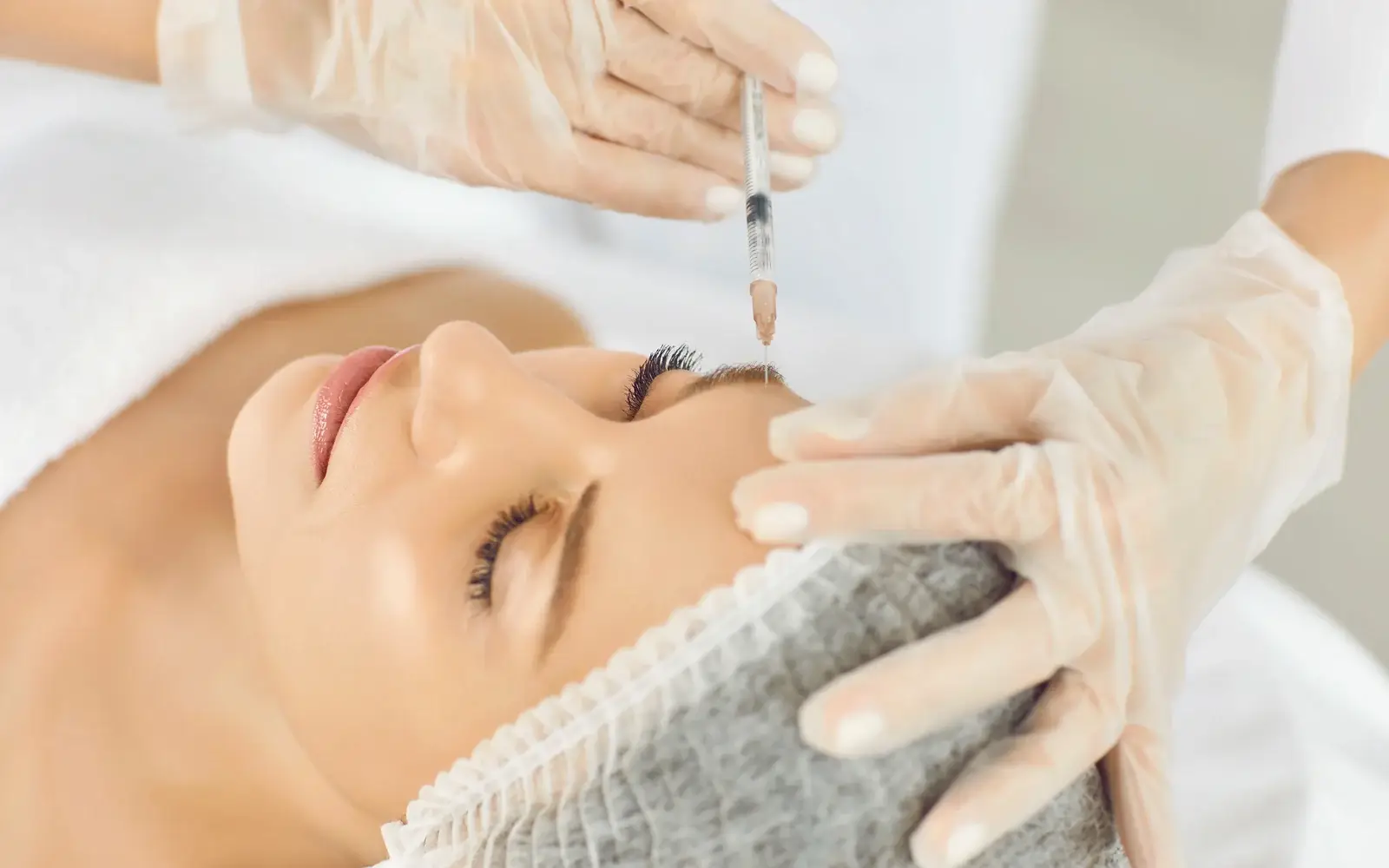
Two to three sessions spaced four to six weeks apart is typical, and the spacing gives collagen time to form between rounds. There is no dramatic day-one result; the change is judged at two to three months, and most people revisit it around the year mark. Under the eyes, where the skin is thin and filler can hold water or cast a bluish shadow, PRP is often the better first choice: it improves the quality of the skin rather than propping it up.
PRP supports skin quality and the appearance of volume loss for appropriate candidates; it is not a substitute for surgical correction of significant laxity, and it will not resolve under-eye shadowing caused by pigment or bone structure.
▶What to expect
Four steps, one visit.
01
Consultation and candidacy
01 · Consultation and candidacy. A physician looks at what is actually driving the concern, volume loss, skin quality, pigment, or structure, and tells you plainly whether PRP addresses it. If it doesn't, we say so. This appointment is free and carries no obligation to book.
02
Draw and spin, in the room
02 · Draw and spin, in the room. A small blood sample is drawn and placed in a centrifuge on site. Spinning separates the platelet-rich fraction from the rest. Nothing leaves the office and nothing is prepared in advance, the concentrate used on you is made from your blood that morning.
03
Numbing, then injection
03 · Numbing, then injection. Topical numbing goes on first. The injections themselves are placed into the areas identified at consultation, and most people describe brief stinging rather than pain. Allow around 60 to 90 minutes for the whole visit including the draw and processing.
04
Follow-up at six weeks, and an honest read
04 · Follow-up at six weeks, and an honest read. We look at the result together before deciding whether the next session is worth doing. If the first round didn't move what you wanted moved, we will tell you that rather than sell you the rest of a package.
An honest word on PRP and the FDA
PRP is not FDA-approved as a treatment for facial aging. What is regulated are the centrifuge systems used to prepare platelet-rich plasma, which are FDA-cleared for that preparation; using the concentrate on the face is an off-label application made at physician discretion. The published evidence for facial rejuvenation is promising but still developing.
PRP is also not for everyone. We do not treat over active skin infection or recently sunburned skin, and we avoid it during pregnancy and nursing. Bleeding and clotting disorders, anticoagulant use, low platelet counts, active cancer, and certain autoimmune and immune-suppressing conditions are assessed individually, because PRP depends on both a blood draw and a normal healing response. A provider decides candidacy at consultation.
▶Why Pure Body Health
The clinic with nothing to upsell you.
Nearly every practice offering PRP for the face in the East Valley also sells dermal filler and neurotoxin. That shapes the advice you get. Here's what changes when it doesn't:
We don't sell filler.
So "PRP instead of filler" is a clinical opinion here, not a way to move a product line. It also means we'll tell you honestly when filler would serve you better than PRP would, and refer you. (Rather than: sells filler and PRP both.)
Two named, licensed physicians.
Dr. Sarah Stone, ND and Dr. Scott Maymon, ND, MPH, with Arizona license numbers you can verify. You know who is holding the syringe before you arrive. (Rather than: "our expert injectors.")
Drawn and spun in the room.
The draw, the centrifuge and the injection happen on the same visit, in the same office, under the same provider. Nothing is prepared elsewhere or in advance. (Rather than: processed out of sight.)
Reassessed at six weeks.
We look at the first result with you before committing to the rest of the series. If it didn't do what you hoped, that's a conversation, not a sunk cost. (Rather than: package sold up front.)
▶Next step
Start with the free consultation.
Bring your face and your questions. You'll get a straight read on whether PRP addresses what's actually bothering you, which areas are worth treating, how many sessions to expect, what the course costs, and whether something else would serve you better. No obligation to book anything.
▶FAQ
PRP for the face, answered.
What is a PRP facial?
A PRP facial uses platelet-rich plasma concentrated from your own blood, injected into the face to prompt your skin to build new collagen. A small sample is drawn, spun in a centrifuge to separate the platelet-rich fraction, and placed where the face has lost support, commonly the mid-face, temples and under-eye area. Nothing synthetic is added. The change comes from your own repair response, which is why it builds over two to three months rather than appearing immediately.
How much does a PRP facial cost in South Tempe?
Cost depends on how many areas are treated in a visit and how many sessions your plan calls for, so the figure that matters is the price of the full course, not one appointment. A single under-eye treatment and a full mid-face series are different purchases. Ask any clinic whether the blood draw and processing are included in the quoted price, because that varies. We review the complete plan and its cost at your free consultation, before anything is booked.
Is a PRP facial the same as a vampire facial?
Not quite, "vampire facial" almost always refers to PRP applied over microneedling channels, not PRP injected into the face. Both use your own platelets, but they are different procedures with different depths, different downtime and different best uses. Injected PRP addresses volume loss and skin quality in specific areas; the microneedling version treats the surface more broadly. If the microneedling version is what you want, it's on our microneedling page.
What is the difference between PRP and PRF?
PRF, platelet-rich fibrin, is spun more slowly and without anticoagulant, so it forms a fibrin matrix that releases growth factors more gradually. PRP is spun faster and stays liquid, which makes it easier to place precisely. Neither is universally better; they suit different areas and different goals, and the published evidence does not clearly favor one over the other for facial use. Your provider will explain which preparation is being used and why at your consultation.
Can PRP help dark circles or hollows under my eyes?
Sometimes; it depends entirely on what is causing them, and that is the assessment that matters most. Where the shadowing comes from thin, crepey skin or genuine hollowing, PRP can improve skin quality and thickness in a plane where filler often behaves badly. Where it comes from pigment or from the underlying bone structure, PRP will not change it and we will tell you so rather than treat it anyway. The under-eye area also swells and bruises more than anywhere else on the face, so plan two to three days around it.
Is PRP better than dermal filler?
They do different jobs, and the honest answer is that filler is better at replacing volume while PRP is better at improving skin quality. If the concern is a hollow that needs filling now, filler does that immediately and PRP does not. If the concern is texture, crepiness, thinning skin, or wanting gradual change without a synthetic material, PRP is the better fit. We don't sell filler, so we have no stake in which you choose, and we'll refer you if filler is genuinely the better answer for your face.
How many PRP sessions will I need?
Two to three sessions spaced four to six weeks apart is typical for the face, with the spacing chosen to let collagen form between rounds. Deeper scarring and more significant volume loss often need more. Your physician gives you a specific plan at consultation rather than an open-ended package, and we reassess at six weeks before committing to the rest of the series.
How long do PRP facial results last?
Where PRP works well, most people revisit it somewhere around the twelve-month mark, though this varies widely. The result isn't a material sitting in your face that gradually breaks down, it's collagen your own body produced, so how long it holds depends on your age, your sun exposure, your health and how you look after your skin. In Arizona, sun protection is the single biggest variable in that. Individual results vary and no outcome is guaranteed.
Does a PRP facial hurt?
Most people describe brief stinging at the injection points rather than pain, with topical numbing applied first. The under-eye area and the temples are usually felt more than the cheeks. Allow around 60 to 90 minutes for the whole appointment, including the blood draw and the time the sample spends in the centrifuge. Tell your provider if anything is uncomfortable, technique and pacing can be adjusted.
Is there downtime after a PRP facial?
Expect two to three days of swelling and possible bruising at the injection points, most noticeably under the eyes. It is low-downtime, not no-downtime. Bruising can take up to a week to fade fully. Skip strenuous exercise and alcohol for the first 24 hours, and be serious about sun protection for the following two weeks, in South Tempe that is the difference between supporting new collagen and undoing it.
Who shouldn't have PRP?
We don't treat over active skin infection or recently sunburned skin, and we avoid PRP during pregnancy and while nursing. Bleeding and clotting disorders, anticoagulant use, low platelet counts, active cancer, and certain autoimmune or immune-suppressing conditions are assessed individually, because PRP depends on both a blood draw and a normal healing response. Candidacy is determined by a provider at your consultation, not from a page.
Is PRP FDA-approved for facial rejuvenation?
No. PRP is not FDA-approved as a treatment for facial aging, and its use in aesthetics is off-label. What is regulated are the centrifuge systems used to prepare platelet-rich plasma, which are FDA-cleared devices for that purpose. Off-label use at physician discretion is common and lawful in medicine, but it is not the same as approval, and you should be wary of any clinic that blurs the two. The evidence base for PRP in facial rejuvenation is promising and still developing.
▶Get started
Book a PRP facial in South Tempe.
A free consultation with a licensed naturopathic physician, honest answers about what PRP will and won't do for your face.
▶Patients we serve across the Valley
Rooted in South Tempe, close to the whole East Valley.
Just off I-10 at Elliot Road on South Priest Drive, an easy drive from Ahwatukee, Chandler, Gilbert, Mesa, Scottsdale, and Phoenix.
- South Tempe~5 min
- Ahwatukee Foothills~12 min
- Chandler~20 min
- Mesa~22 min
- Gilbert~24 min
- Scottsdale~25 min
- Phoenix~25 min
Approximate drive times in typical Valley traffic.